
 EN
EN
Chemical Finishing for Controlled Moisture Transport in Wicking Fabric
Hydrophilic finishes that amplify capillary action on the inner surface
The moisture management capability of a wicking fabric often starts with a chemical finish applied directly to the garment’s inner layer. These hydrophilic finishes create a durable, ultra-thin polymeric coating on the fiber surface—transforming inherently hydrophobic synthetics like polyester into high-affinity water magnets. This surface modification lowers the contact angle, enabling rapid sweat spreading and intensifying capillary action within the fabric’s microscopic channels. In a 2020 study by Krithika et al., amino silicone polyether copolymers and hydrophilic polymers boosted wicking rates by over 50% compared to untreated controls. The resulting pull-effect draws perspiration away from the skin almost instantly, forming a thin film that evaporates more efficiently. Key additives—including polyethylene glycol derivatives and modified silicones—are typically applied via pad-dry-cure processes to ensure uniform distribution. However, performance can degrade with repeated laundering as the finish gradually washes out, underscoring the need for formulations with improved wash-fastness.
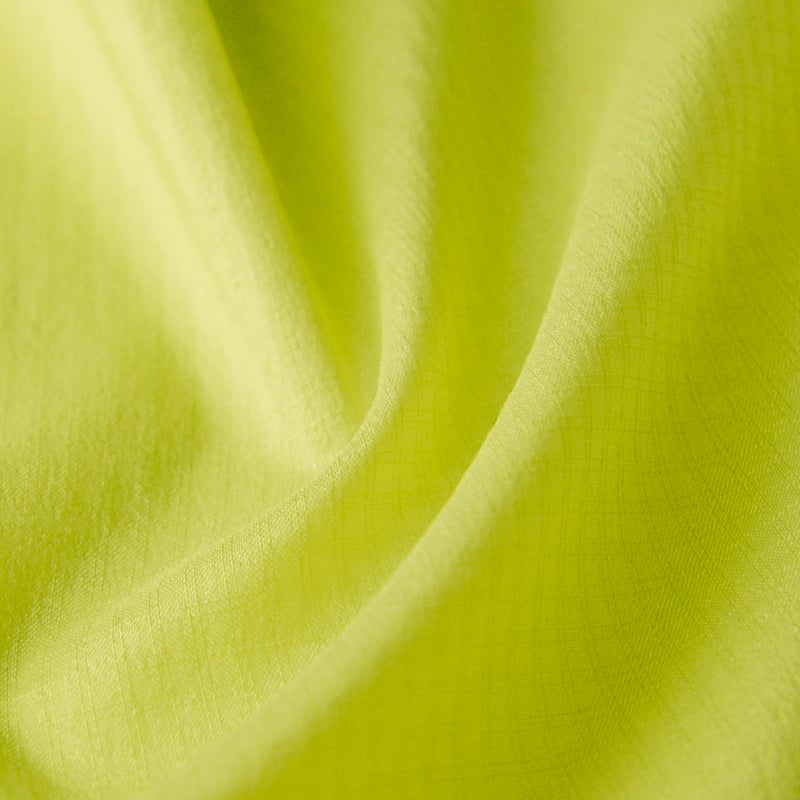
Two-stage moisture transport: adsorption and capillary diffusion dynamics
Controlled moisture transport operates through two sequential, interdependent stages. First, adsorption: water molecules from sweat bind rapidly to the hydrophilic coating on inner fibers via hydrogen bonding and van der Waals forces—saturating the near-surface layer and establishing a concentration gradient. Second, capillary diffusion: bound moisture migrates along fiber bundles and through inter-fiber pores, driven by capillary pressure differences. Smaller effective pore radii generate stronger capillary suction, pulling liquid toward the outer, more hydrophobic side of the fabric. There, moisture spreads across a larger surface area and evaporates quickly. This two-stage mechanism ensures unidirectional flow—minimizing re-wet sensation and supporting thermoregulation. By tuning the hydrophilic finish’s thickness and cross-linking density, manufacturers can precisely calibrate adsorption rate and diffusion speed, tailoring performance for specific athletic or occupational use cases.
Emerging Dry & Precision Finishing Technologies for Wicking Fabric
Plasma finishing: eco-friendly surface activation without water or chemicals
Plasma finishing is a dry, solvent-free process that activates the surface of wicking fabric at the molecular level—enhancing moisture transport without water, chemicals, or effluent. Using ionized gas in a vacuum chamber, it inserts polar functional groups (e.g., –OH, –COOH) onto synthetic fibers, increasing hydrophilicity while preserving hand feel and weight. A 2022 study in the Journal of Industrial Textiles confirmed that short plasma treatments improve vertical wicking height by up to 40% on polyester. Because the process requires no drying and eliminates rinse cycles, it reduces water consumption by over 90% versus conventional wet finishing and cuts energy use significantly. It leaves no chemical residues—making it ideal for sensitive-skin applications—and avoids hazardous chemical handling entirely. Compatible with nylon, polypropylene, and other synthetics, plasma treatment can be finely tuned via gas composition, power input, and exposure time to match diverse fabric constructions and performance targets.
Nano- and polymer-based patterning for directional hydrophobic/hydrophilic zones
Directional moisture control is achieved through microscale patterning that establishes precise hydrophobic/hydrophilic gradients across the fabric. A common strategy applies hydrophobic polymer dots—via inkjet or screen printing—to the inner surface, while leaving the outer face hydrophilic. This design creates a push-pull effect: sweat is repelled from skin-facing hydrophobic zones and drawn into adjacent hydrophilic channels, accelerating outward transport. Such spatial control enables engineers to map sweat pathways—e.g., denser hydrophobic patterning on high-sweat zones like the back—without compromising breathability or drape. A 2023 study in Textile Research Journal demonstrated that patterned fabrics achieve a one-way moisture transfer index exceeding 400, reflecting superior directional efficiency. When combined with plasma pre-treatment, polymer patterning gains enhanced adhesion and long-term wash durability—ensuring consistent performance across multiple laundering cycles.
Synergy Between Fabric Construction and Finishing for Optimal Wicking Fabric Performance
The most effective wicking fabric emerges from the intentional integration of physical structure and surface chemistry. Fabric construction—whether double-layer mesh (with larger pores against the skin and finer ones outward) or engineered knit geometries—creates intrinsic capillary channels that guide moisture directionally. Low-moisture-regain fibers like polyester and polypropylene form the structural foundation, but their performance is amplified only through targeted finishing. Hydrophilic coatings on the inner surface optimize adsorption; plasma activation delivers durable, residue-free hydrophilicity; and nano-patterned hydrophobic/hydrophilic zones enforce unidirectional flow. Together, these elements ensure rapid moisture removal from the skin and efficient evaporation at the fabric surface. Crucially, synergy also enhances durability: covalently bonded finishes paired with stable yarn geometry resist degradation wash after wash—maintaining consistent wicking rates. Ultimately, optimal performance in demanding athletic or medical applications depends not on any single intervention, but on the calibrated interplay of pore architecture, fiber morphology, and finish chemistry.
FAQ
What is a hydrophilic finish, and how does it benefit wicking fabric?
A hydrophilic finish is a chemical coating applied to fibers that increases their affinity for water. It enhances wicking fabric by improving moisture transport through rapid sweat adsorption and capillary action, ensuring efficient evaporation.
How does plasma finishing improve wicking fabric performance?
Plasma finishing activates the surface of fibers using ionized gas, enhancing hydrophilicity at a molecular level without chemicals or water—improving moisture transport, durability, and eco-friendliness.
What are the advantages of nano-patterning in wicking fabrics?
Nano-patterning allows precise control of hydrophobic and hydrophilic zones on fabric surfaces, boosting directional moisture transport efficiency while maintaining breathability and drape.
Can wicking fabric maintain its performance after multiple washes?
Yes, fabrics with durable finishes, such as covalently bonded coatings or plasma-treated fibers, combined with stable fabric construction, can resist performance degradation even after repeated laundering.